
Projects
Managing with Uncertainty
Wild ungulate management takes place in a complex and changing system. Wildlife populations, ecosystems and human activities interact in ways that cannot be fully predicted or controlled. As a result, management decisions inevitably involve uncertainty.
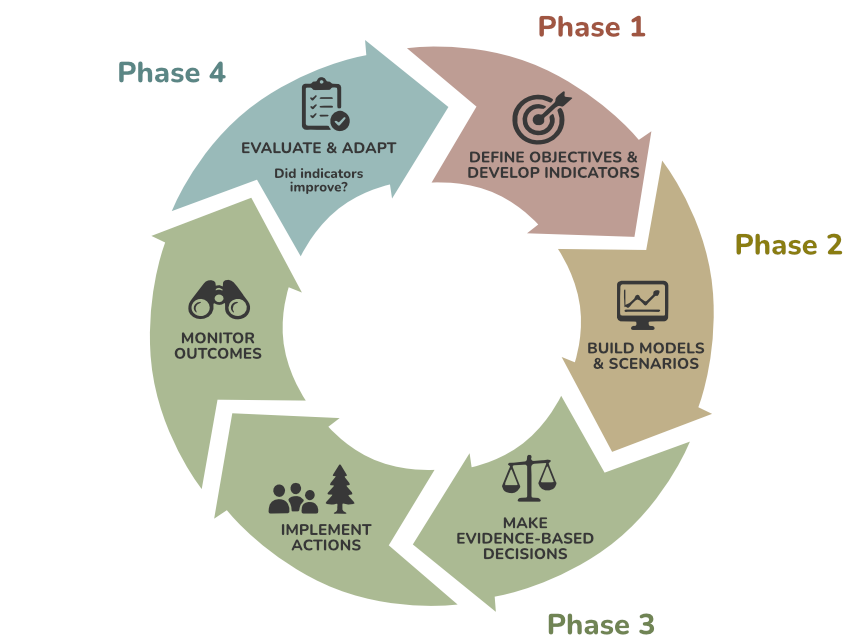
Adaptive management embraces this uncertainty rather than ignoring it. It is a structured, iterative approach based on learning by doing: management actions are implemented, their outcomes are monitored and evaluated, and what we learn is used to improve future decisions.
This creates a flexible cycle of act, monitor, learn and adapt, allowing management strategies to be continuously evaluated and refined as new knowledge becomes available.
Rather than aiming to eliminate uncertainty, adaptive management makes it explicit and supports better decisions by quantifying uncertainty and risk.
Population Genetics Analysis
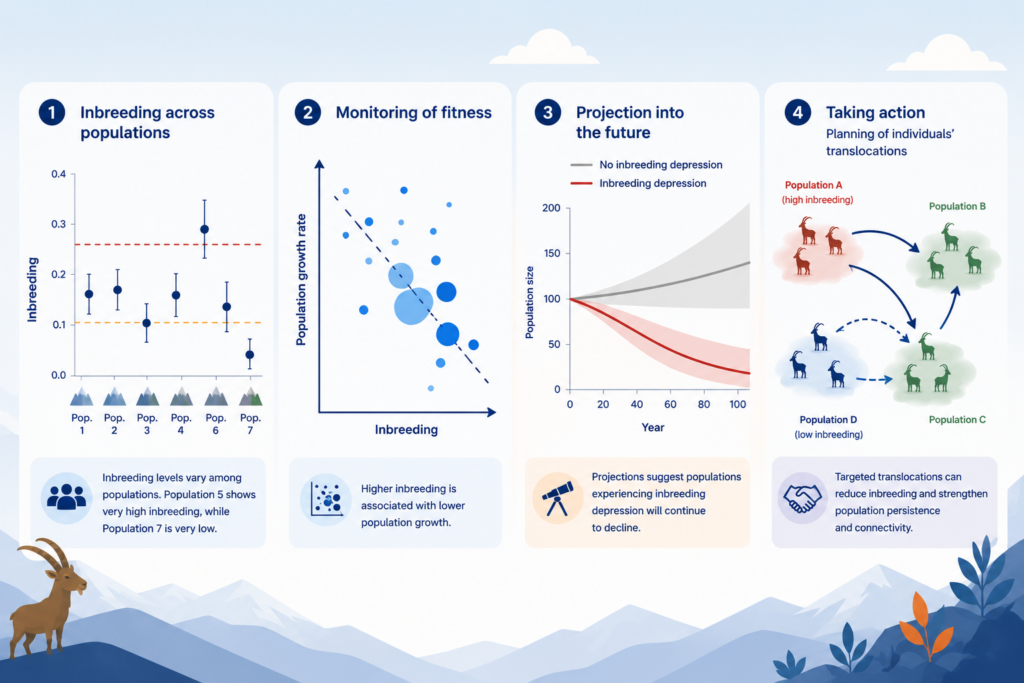
Translocation and Release Planning When genetics jumps to the rescue.
We use population genetic analyses to assess genetic diversity, detect inbreeding, monitor population fitness, forecast future risks, and identify effective management actions such as targeted translocations. The result is clear, science-based guidance for healthy and resilient wildlife populations.
Are you planning a genetic rescue and are in need of strategy evaluation ?
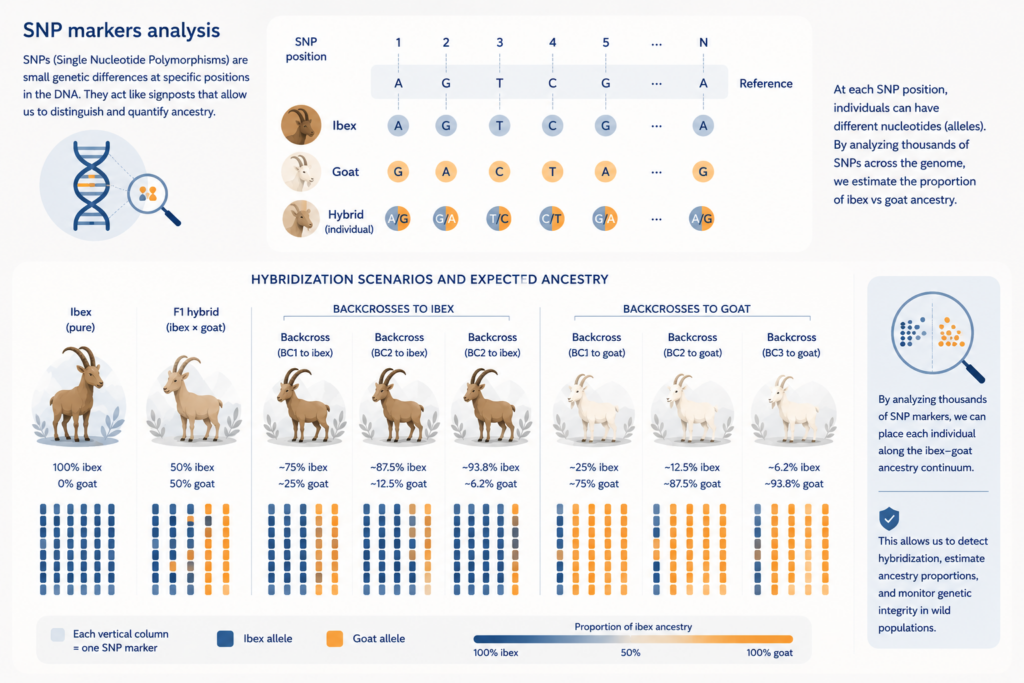
Hybrids Detection How high-resolution genetic markers reveal hidden ancestry.
Hybridization between wild and domestic animals is often impossible to detect reliably from appearance alone. Using thousands of genome-wide genetic markers, we identify hybrids, estimate the proportion of ancestry from each species, distinguish recent from historical introgression, and provide robust evidence to support wildlife management and conservation decisions.
Interested?
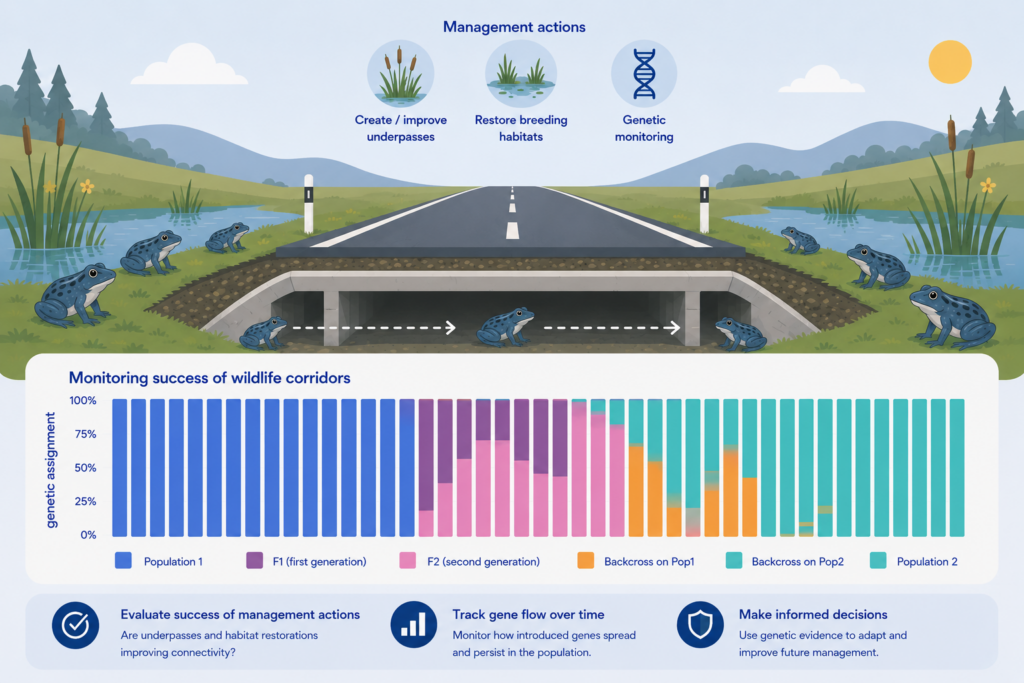
Success of Wildlife Corridors Monitoring through fine analysis.
Infrastructure such as wildlife corridors, underpasses, and habitat restoration aims to restore connectivity. We use genome-wide genetic markers to measure gene flow, monitor the spread of individuals and their descendants, and quantify the long-term success of management actions. The result is clear, evidence-based feedback that helps optimize future conservation measures.
Would you like to assess the success of your corridor?
Where observational data and population dynamics analysis alone find their limits, genetics digs deeper providing in-depth insights for better management decisions.
Explore the possibilities.
Data Solutions
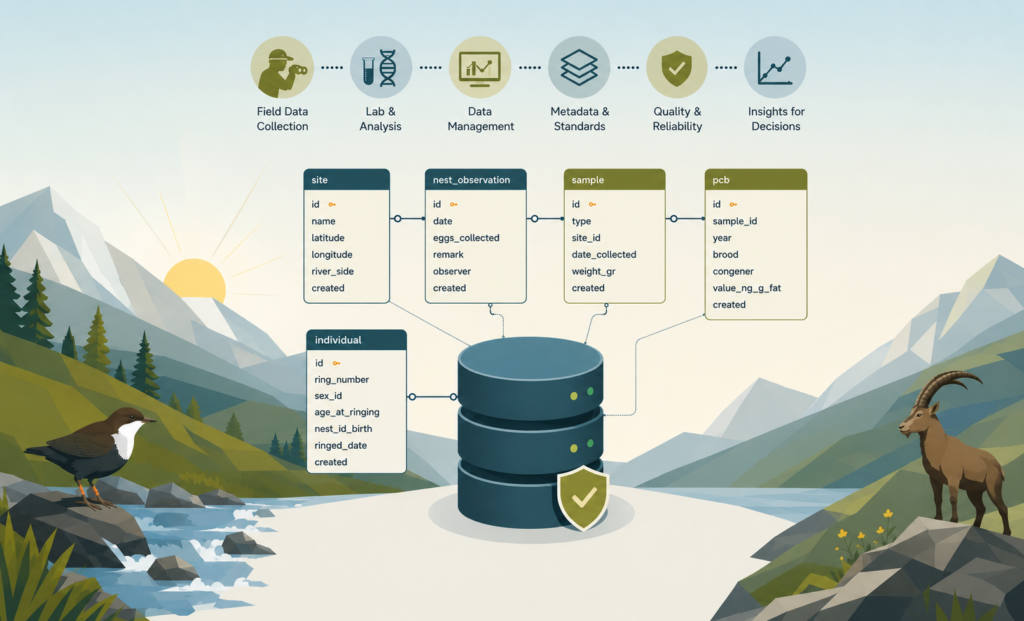
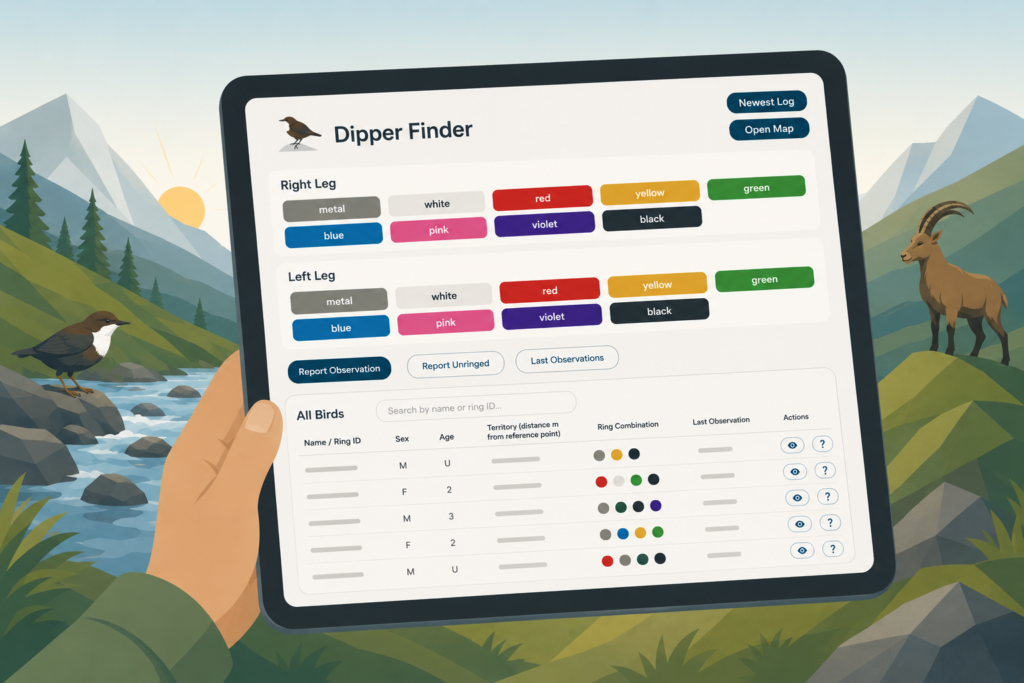
Built on Good Data from the Start Reliable ecological analyses begin long before the first model is run.
We help design intuitive data structures that link field observations, laboratory analyses, and metadata into a coherent whole, preserving context from collection to interpretation.
Thoughtfully designed databases make collaboration easier, reduce errors, and ensure that knowledge continues to support monitoring, research, and informed wildlife management long after individual projects have ended.